Table of Contents
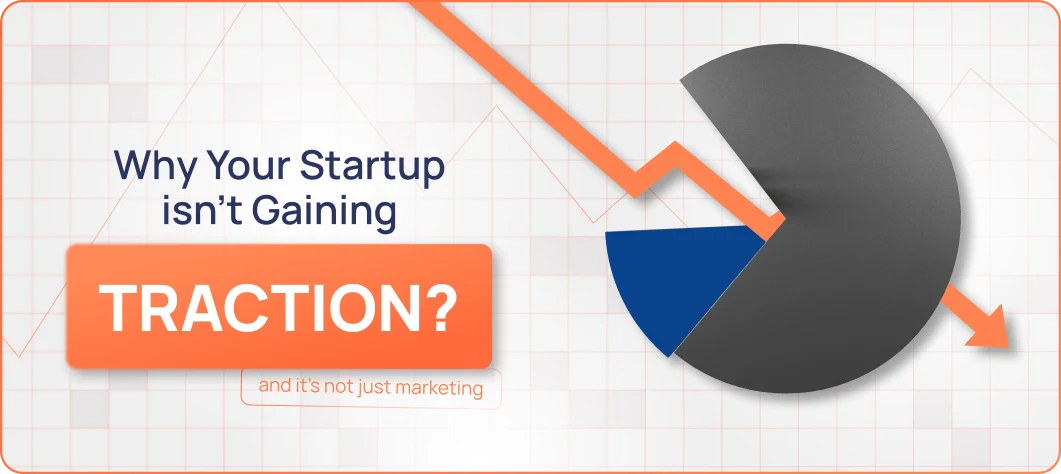
According to a survey, approximately 90% of startups fail, with poor traction often stemming from inadequate market validation and a weak understanding of customer needs being a key contributing factor. You have built your product. You have launched it. You have told everyone who would listen. But… nothing. No signups. No active users. No growth. In 2025, startup traction problems are more frustrating than any other issue, bumping the ride. Despite all the tools, playbooks, and expert advice, many founders still hit the same wall; no one seems to care. A go-to-market mistake This stage is where most early-stage startups struggle to begin. Product launch issues pile up. Doubt creeps in and shatters all the confidence you had. Startup growth challenges stall momentum. If your business remains stagnant, you are not alone. Let's dissect why traction is so capricious—and what you can do about it.
The Illusion of “Build and They Will Come
Most founders get caught up in believing a good product is sufficient. But startup traction issues go deeper than that. Without validation, visibility, or strategy, even the best idea fails.
- Most startups build in isolation, hoping users will magically follow.
- They overlook real-world demand and bypass customer validation.
- There may be no distribution or user acquisition plan.
- Startup visibility gaps keep the product from reaching its audience.
- As a result, the founders lament, “My product is live but no one is using it.“
These initial market entry pain points become massive growth blockers. The product might function, but traction never arrives. That is the reason startups do not get traction—not because of bad ideas, but because of bad fit with the market.
Scaling requires that you exceed the build. Pay attention to testing, feedback, and distribution from day one.
Not Enough Demand (Or the Wrong Problem)
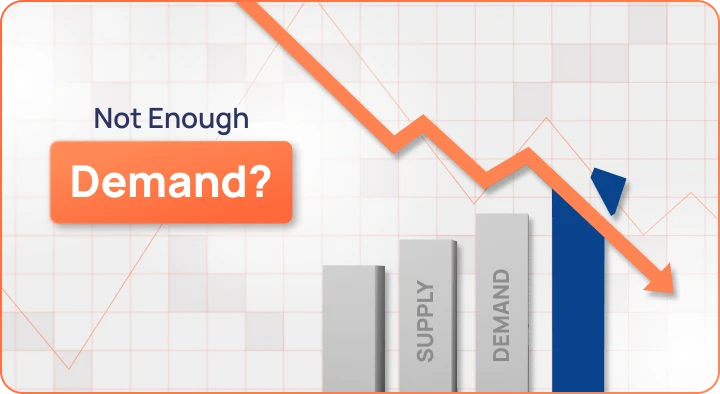
Most seed-stage entrepreneurs get demand and excitement mixed up. This creates fatal startup traction problems that appear early—usually within the first 6 months of a startup with no users.
- Confusing a “cool idea” with a real market need.
- Targeting markets that are too large, too competitive, or both
- Fixing superficial symptoms, not underlying user issues
- Experiencing a startup visibility gap—people simply don’t know it exists
- Terrible customer acquisition strategies that can’t convert
These initial failures become major growth blockers. You have a product that works but still can’t scale. You’re at the gate—having a hard time crossing actual market entry roadblocks.
If getting customers isn’t happening, take a step back. Re-center on the problem you’re solving, the people you’re solving it for, and how they’ll find you. Growth is born of clarity, not guesswork.
Your Users Are Confused or Uninterested
In the early days, you don’t get a second chance. A lot of =s occur not due to a poor product, but because users never “get it” the first time.
- Poor UX or cumbersome onboarding causes drop-offs in seconds
- No emotional hook—users don’t feel a reason to stick around
- The value isn’t clear—what it does and why it matters gets lost
- Ambiguous users don’t convert, causing startup visibility gaps
- These little slips become big growth stumbling blocks
These startup traction issues compound into long-term startup growth challenges. There is traffic, but conversion is low. There is interest, but users bounce.
These are the quiet market entry pain points—easy to overlook, difficult to overcome. If you’re experiencing early-stage startup struggles, take another look at your messaging, flow, and design. Get the first impression right, and you’ll unlock lasting traction.
Go-To-Market Strategy Is an Afterthought
One of the largest startup traction problems is to treat launch as the starting line. In real life, traction starts prior to launch—and many founders miss this opportunity.
- Going live with no pre-launch audience means no early momentum
- Experimenting with too many channels (social, ads, cold emails) with no clear focus results in burnout and subpar results
- Avoiding the work of establishing a clear ICP (Ideal Customer Profile) results in scattered messaging and poor targeting
These holes become major product launch problems. Without an audience, without clarity, and without a plan, even great products are forgotten.
These types of errors become long-term startup growth roadblocks and expensive early-stage startup nightmares. Founders work hard but experience minimal traction.
Your Go-To-Market (GTM) strategy is not discretionary—it’s your anchor. Create it early, make it narrow, and launch with intent.
Early Feedback Is Being Ignored
With the hurry to scale, most founders miss valuable signals. Silence does not necessarily equate to satisfaction—it tends to conceal deeper startup traction issues.
- Assuming silence = satisfaction creates false confidence
- Not communicating with drop-offs or non-converters translates to missing crucial insights
- Ignoring negative feedback as outliers reinforces blind spots
These behaviors build hazardous growth stoppers. You lose sight of why customer acquisition isn’t working, and why the first 6 months of your startup are like a black hole.
Without feedback, market entry pain points remain concealed. Users may visit, try, or bounce—but you won’t see why. That’s how the startup visibility gap grows.
Listening isn’t praise. It’s the tension, uncertainty, and disagreements that deter users. Dive into the quiet. That’s where traction starts.
Founder Mental Whiplash: Confidence vs Panic

One of the most overlooked startup traction problems is what happens in the founder’s mind. When growth stalls, self-doubt creeps in—and fast.
- You swing between “this will work” and “we’re doomed” almost daily
- Every decision gets second-guessed, slowing progress
- Imposter syndrome combines with pressure from investors, peers, or team—leading to mental paralysis
These internal struggles make startup growth challenges even more difficult to fix. The actual problem could be lack of user engagement or bad messaging, but the noise in your head obscures judgment.
This emotional rollercoaster drives early-stage startup struggles. Panic creates overcorrection. Self-assurance creates blind spots. The outcome? The signals are missed and more profound product launch issues.
Identifying this pattern is the key. Traction isn’t merely about product or users—it’s also about remaining calm and on track when everything else seems up in the air.
Conclusions
Startup traction problems aren’t due to terrible ideas, they’re due to poor validation, poor messaging, and a lack of focus. The majority of founders take too long to test, listen, and adjust. The reality? Construction is only the start. Traction results from fixing real issues for real humans—and making that value clear from the initial click.
Stop making assumptions. Start listening. Refine your strategy.
Because the fact remains, traction isn’t magic. It’s about a method.